A clean kitchen is not just about shiny counters.
Cabinets and drawers hold grease, crumbs, dust, spills, fingerprints, and hidden buildup that can make the whole kitchen feel untidy. That is why learning how to clean kitchen cabinets and drawers matters for both hygiene and organization.
Regular cleaning helps your kitchen look better, smell fresher, and stay easier to manage. It also makes everyday cooking feel more pleasant.
For light upkeep, a simple home routine is enough. For stubborn grease, deep stains, or a full kitchen reset, professional help can save time and effort.
Why Regular Cleaning of Kitchen Cabinets and Drawers is Crucial
When you clean kitchen cabinets and clean kitchen drawers regularly, the whole kitchen stays easier to maintain.
First, it helps reduce grease, crumbs, and dust buildup. That matters because these small messes can collect fast, especially near the stove and food prep areas.
Second, it keeps the kitchen looking neat. Cabinet doors, handles, and drawer fronts pick up marks every day. A regular wipe keeps them looking fresh.
Third, it helps protect the finish. Grease, spills, and grime left too long can become harder to remove later. Regular care is easier than a full scrub after months of buildup.
If you are building a better cleaning routine for the whole home, Why Professional Cleaning Saves You Time and Stress is a useful read.
Step-by-Step Guide to Clean Kitchen Cabinets and Drawers
Keeping the process simple makes how to clean kitchen cabinets and drawers much easier to follow and repeat.
What You Need to Get Started
You do not need a long list of products to get started.
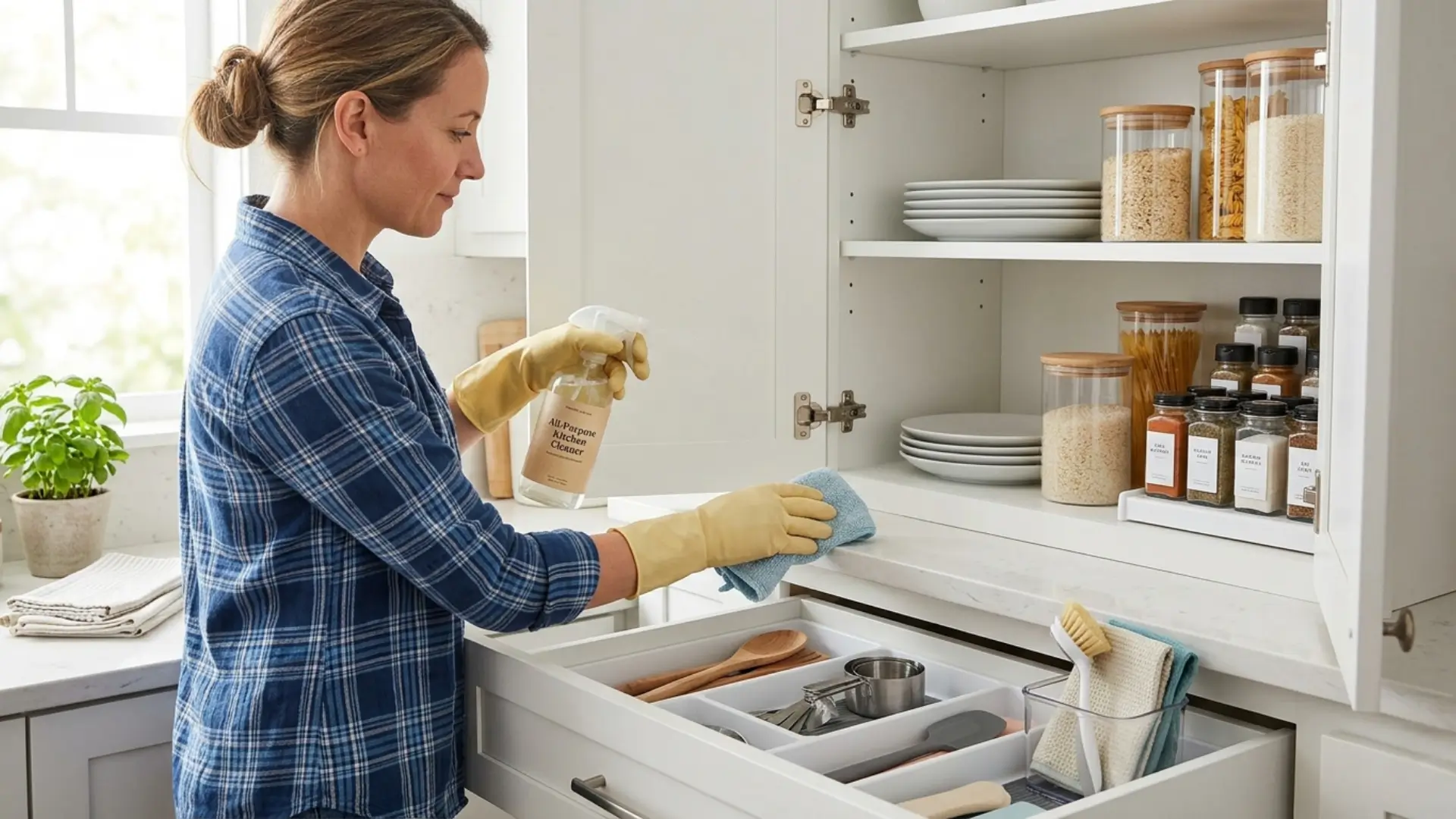
Most of the time, simple kitchen cleaning supplies work well. Use a microfiber cloth, warm water, mild dish soap, a dry towel, a soft brush, and gloves if needed.
For sticky spots, keep baking soda ready. For a gentler routine, many people also use eco-friendly cleaners like diluted vinegar or lemon based solutions, but always test first on a small hidden area.
A simple setup includes:
- Microfiber cloth
- Warm water
- Mild dish soap
- Dry towel
- Soft toothbrush or small detailing brush
- Baking soda
- Spray bottle
- Gloves
If you want to use gentler products across the home, read The Benefits of Eco Friendly Cleaning for Your Home.
How to Clean Kitchen Cabinets (Inside and Out)
Start by emptying one cabinet at a time.
This makes the job easier and gives you space to clean properly. It also lets you remove expired items, crumbs, and anything you no longer use.
For the cleaning kitchen cabinet interior, wipe away dry dust first. Then use a soft cloth with warm water and mild soap. Wring the cloth well. It should be damp, not wet.
For the outside, follow the same process. These cabinet exterior cleaning tips work best when you clean doors, edges, handles, and the frame around the doors, not just the front panels.
For wooden and laminated cabinets, use non abrasive products only. Avoid rough scrubbers and avoid soaking the surface.
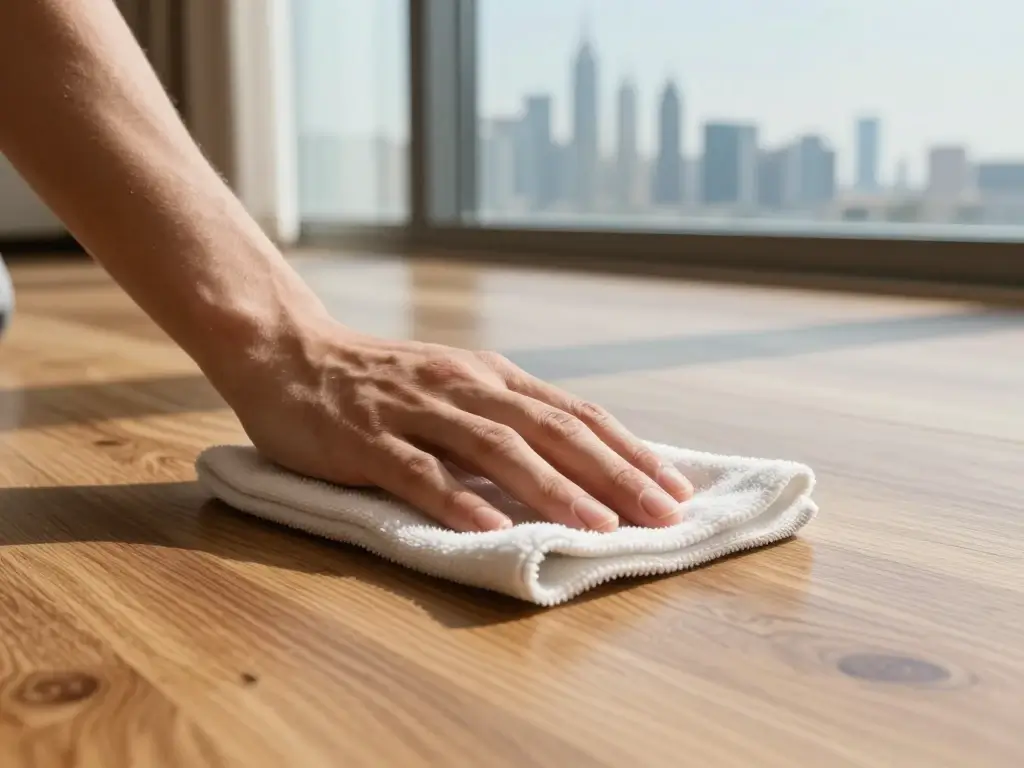
Dry every section after cleaning. Proper drying helps reduce streaks and helps avoid water marks or moisture sitting on the finish.
If your cabinets have heavy buildup or old grease, Deep Cleaning Services In Dubai is the safer option.
How to Clean Kitchen Drawers Thoroughly
Drawer cleaning should be part of the same routine.
Start by removing everything from the drawer. Shake out crumbs into the bin. If needed, vacuum the corners before wiping.
Use a damp microfiber cloth with mild soap to clean the inside. Dry it fully before putting anything back.
These cleaning tips for kitchen drawers work even better when you clean the organizer tray too. That is often where the hidden dust and sticky residue sits.
As you return items, organize them. Group utensils, tools, or spice jars properly. Cleaning is the best time to improve storage and make the drawer easier to use later.
For a wider home refresh, get House Cleaning Services In Dubai.
How Often Should You Clean Kitchen Cabinets and Drawers?
A simple kitchen cleaning schedule makes this job easier.
For most homes, cabinet doors and handles should be wiped every week or every other week. This helps remove fresh grease, fingerprints, and cooking residue before it builds up.
Drawer interiors and cabinet shelves can usually be cleaned every few months. If you cook often, fry food regularly, or deal with frequent spills, you may need to clean sooner.
A good rule is this:
Light wipe downs for regular upkeep
Deeper cleaning when visible grease, crumbs, or stains build up
Seasonal resets for the full inside and outside clean
This kind of cleaning frequency keeps the kitchen manageable without turning every clean into a huge task.
If you are trying to figure out when a routine clean is no longer enough, read When Do You Need a Deep Cleaning Service?
Eco-Friendly Cleaning Tips for Cabinets and Drawers
Many homeowners now prefer eco-friendly kitchen cleaning because it feels lighter, simpler, and more practical for daily use.
A few common green cleaning tips include using baking soda for sticky spots, diluted vinegar for general wiping, and lemon for a fresher smell. These natural ingredients can work well for light cleaning when used carefully.
Still, not every surface reacts the same way. Wood finishes and painted cabinets should always be tested first before using anything acidic.
The main advantage of using gentler cleaners is that they can help reduce strong chemical smells in the kitchen. That matters more in homes where cooking, dining, and family time all happen in the same space.
If you want more ideas for a gentler home care routine, The Benefits of Eco Friendly Cleaning for Your Home belongs naturally in this section.
Common Mistakes to Avoid When Cleaning Kitchen Cabinets and Drawers
A lot of common cleaning mistakes come from trying to clean too fast.
One of the biggest cabinet cleaning errors is using a strong cleaner right away. Start mild first. Most cabinet surfaces do not need anything aggressive.
Another mistake is over wetting the cloth. Too much moisture can leave streaks, spread grime, and sit on the finish longer than it should.
Many people also forget to dry the surface after wiping. That small step makes a big difference.
Another common issue is cleaning only the doors and skipping the hardware, inner corners, shelf edges, and drawer organizers. These hidden areas collect the most dirt.
Professional Cleaning Services: When to Call the Experts
Sometimes DIY cleaning is enough.
Sometimes it is not.
If you are dealing with heavy grease buildup, deep stains, sticky cabinet tops, or old grime that keeps coming back, it may be time to book professional cleaning services.
This is also the better choice when you want the whole kitchen done properly in less time. Professional cleaners can handle the full reset faster and more thoroughly, especially when the mess has gone beyond a normal wipe down.
For homeowners looking for expert kitchen cleaners in Dubai, the best time to call is when the job feels too big, too detailed, or too overdue to manage comfortably on your own.
Don’t have the time? Our experts are ready to clean your kitchen in no time. Just contact us now!
FAQs
How do I remove stubborn grease from kitchen cabinets?
Use a mixture of baking soda and water or a specialized degreaser for kitchen surfaces for tough grease stains. Always test on a small area first to ensure no damage.
Is it safe to use vinegar to clean kitchen cabinets?
Yes, vinegar is a natural, non toxic cleaner that can help remove grease and dirt. Avoid using it on wood finishes without testing first, as it may cause discoloration.
How often should I clean kitchen drawers?
Regularly, especially after spills or storing food items. For deep cleaning, aim to clean them every 3 to 6 months.
Can I clean my kitchen cabinets without removing everything inside?
Yes, but it’s recommended to take items out for a more thorough clean, especially for corners and crevices.